In the land of Bharatavarsha, nestled amidst the sprawling expanse of the Kurukshetra region, lay the illustrious kingdom of Hastinapur. Ruled by the wise King Shantanu of the Kuru dynasty, Hastinapur thrived under his just and noble leadership.
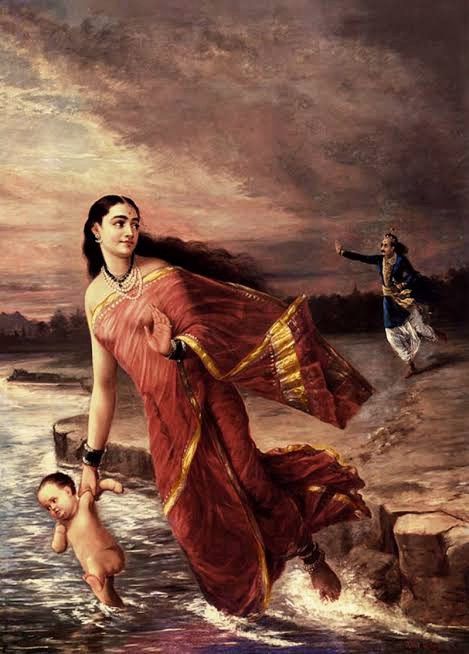
The beginning of the Mahabharata saga traces its roots to the remarkable tale of King Shantanu's encounter with the celestial Ganga, goddess of the river. One serene evening, as the sun dipped below the horizon, King Shantanu found himself strolling along the banks of the sacred Ganges.
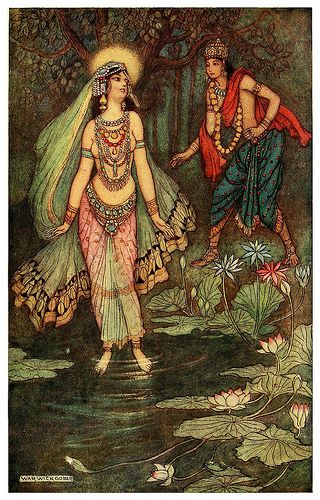
Enchanted by her ethereal beauty, King Shantanu stood transfixed, his gaze unwavering as Ganga approached him with a grace that seemed to transcend mortal realms. With a voice as melodious as the song of celestial beings, she revealed her true nature as the goddess of the sacred river.
Overwhelmed by her celestial presence, King Shantanu bowed in reverence, his heart filled with awe and admiration. Ganga, in turn, bestowed upon him her blessings and expressed her desire to be his queen, to reign by his side as the beloved consort of Hastinapur.
In a moment that would forever alter the course of history, King Shantanu accepted Ganga's divine proposal, binding their fates together in the sacred bond of marriage. Thus, amidst the murmuring whispers of the river and the gentle rustle of the wind, the union of mortal and divine was solemnized, heralding the dawn of a new era for the kingdom of Hastinapur.
As the celestial beings looked on from the heavens above, the stage was set for a saga of epic proportions, where gods and mortals, heroes and villains, would converge in a timeless tale of love, betrayal, and destiny. And so began the grand odyssey of the Mahabharata, with the echoes of Ganga's divine laughter resonating through the ages, heralding the dawn of a new era for Hastinapur and all who dwelled within its storied walls.